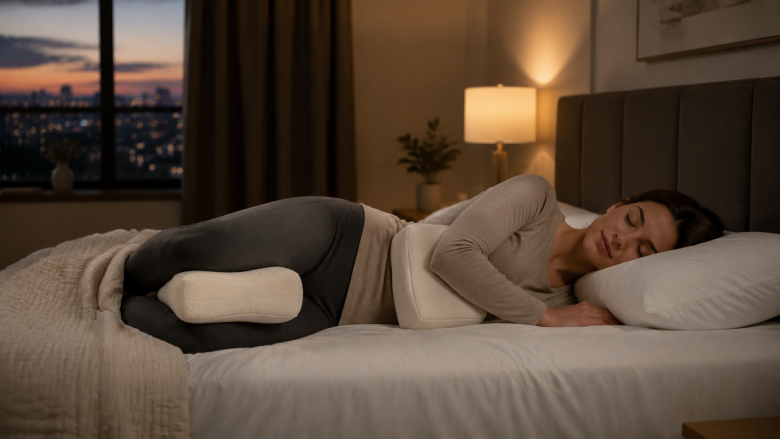
Why Your Back Tightens Up the Moment You Hit the Pillow If you've ever laid down after a long day expecting relief, only to feel your lower back stiffen into a knot the second your head touches the pillow, you know the frustration. The question is not just "how to sleep with tight back muscles" …

Why Your Sleep Habits Keep You Tired (Even When You Get 8 Hours) If you've been sleeping the recommended 7 to 9 hours and still wake up groggy, you're not alone. The problem isn't the hours you spend in bed, it's whether your sleep actually restores your energy. I learned this the hard way when …

Your Walk Is Not Working - Here's Why If you've ever tried to lower stress with a walk outside and ended up feeling more wound up than before, you're not alone. The conventional advice - just get moving - misses the point. What matters is not the distance you cover, but the way you direct …

If you have tried static neck stretches, rolled your head around in circles, and even bought a special pillow, yet you still wake up with a stiff neck, the problem might not be tight muscles. Most people don't realize that chronic neck stiffness is often a protection mechanism. Your nervous system has decided this area …

You know the feeling: the heat creeping up your neck, the sudden awareness of your own heartbeat, the desperate wish to dissolve into the floor. Social anxiety is not just in your head - it lives in your body. And when it hits, the last thing you need is advice about "thinking positive thoughts." You …

Why Menopause Makes You Wake at 3 a.m. (and What Actually Works) If you are waking at the same time every night - especially around 3 a.m. - with a racing heart or a hot flash, you are not broken. This is one of the most common and most misunderstood symptoms of menopause. The short …

Most sleep advice fails because it tells you what to do - dim lights, stop screens, have a chamomile tea - but not how to make that behavior automatic. You already know the routine. The problem is you don't do it. The missing piece is the anchor: a stable cue in your existing evening that …

The Real Reason Your Brain Spins Up Tomorrow's Worries at Night You've been there: it's 11:42 PM, your body is exhausted, but your brain is running a full production of tomorrow's worst-case scenarios. You're not just rehashing the past - you're trying to solve a problem that hasn't happened yet. That's anticipatory anxiety, and it's …

Your Knees Arent Broken. Theyre Under-Touched. The most effective knee friendly exercise isnt a 30-minute workout you dread. Its a series of tiny, deliberate movements scattered throughout your day - what I call movement snacking. This article is a practical toolkit for building that habit, understanding how your knees actually work, and avoiding the movements …

The 3 AM Terror: When Silence Becomes the Enemy The first time I heard my own tinnitus at 3 AM, I thought something was wrong with my house. A high-pitched electrical whine that seemed to come from the walls. When I realized it was inside my head, my heart started pounding. And in that instant, …